
Summary by Andrew Marvin and Davis Piper*
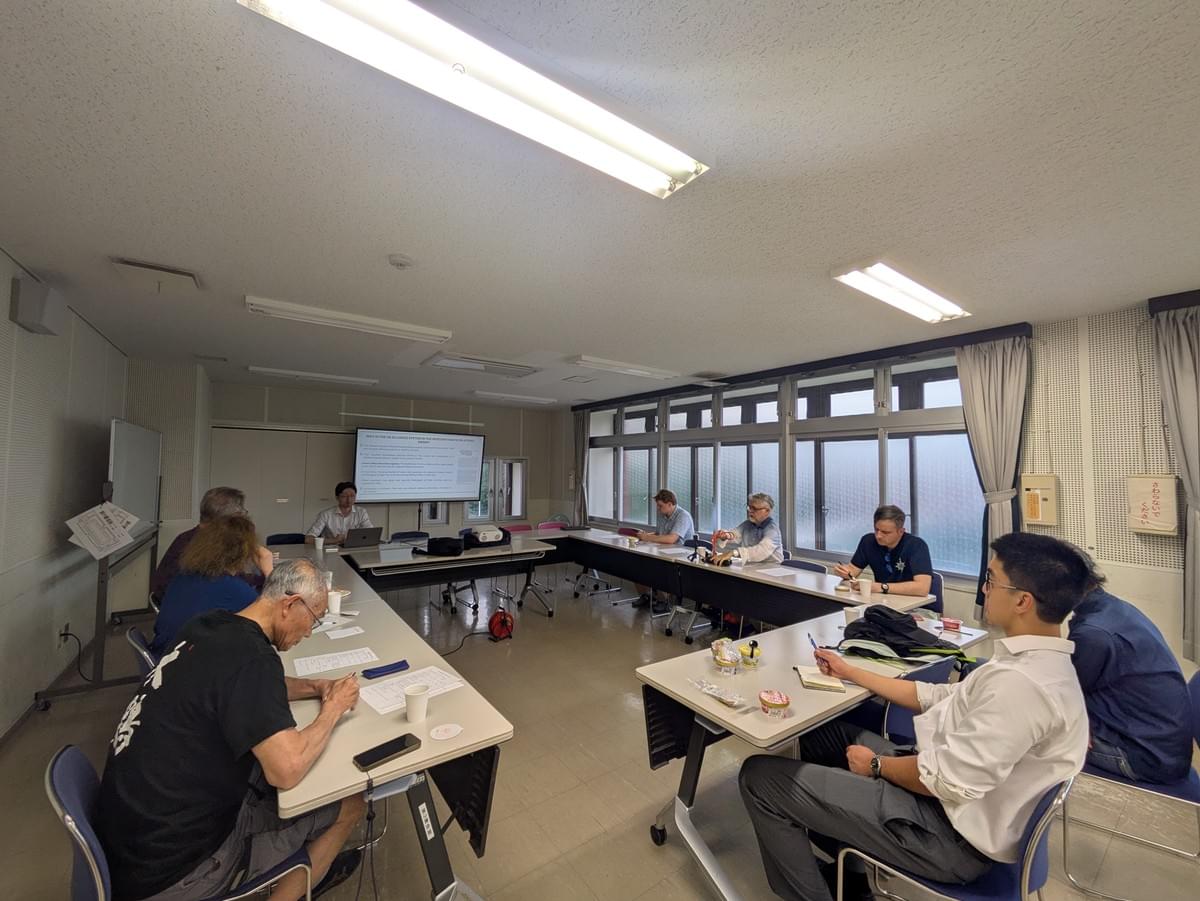
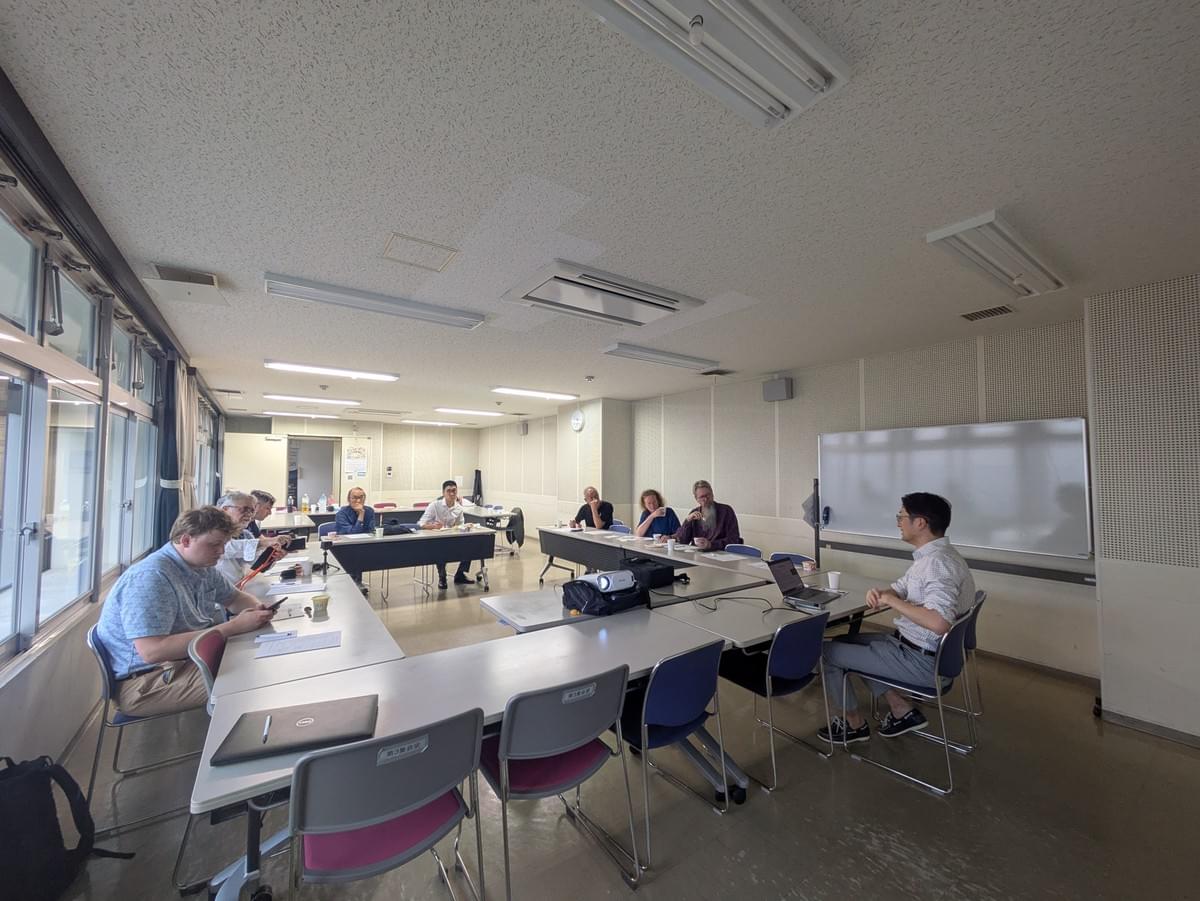
As part of the YCAPS Community Conversations Series, YCAPS members met in Fussa on June 16, for a seminar titled: “Does the Western Pacific need a 'Pacific Defense Pact'?: Explaining the Proliferation of Trilateral Defense Partnerships” with guest speaker Takuya Matsuda, an Assistant Professor at the School of International Politics, Economics and Communication (SIPEC) at Aoyama Gakuin University.
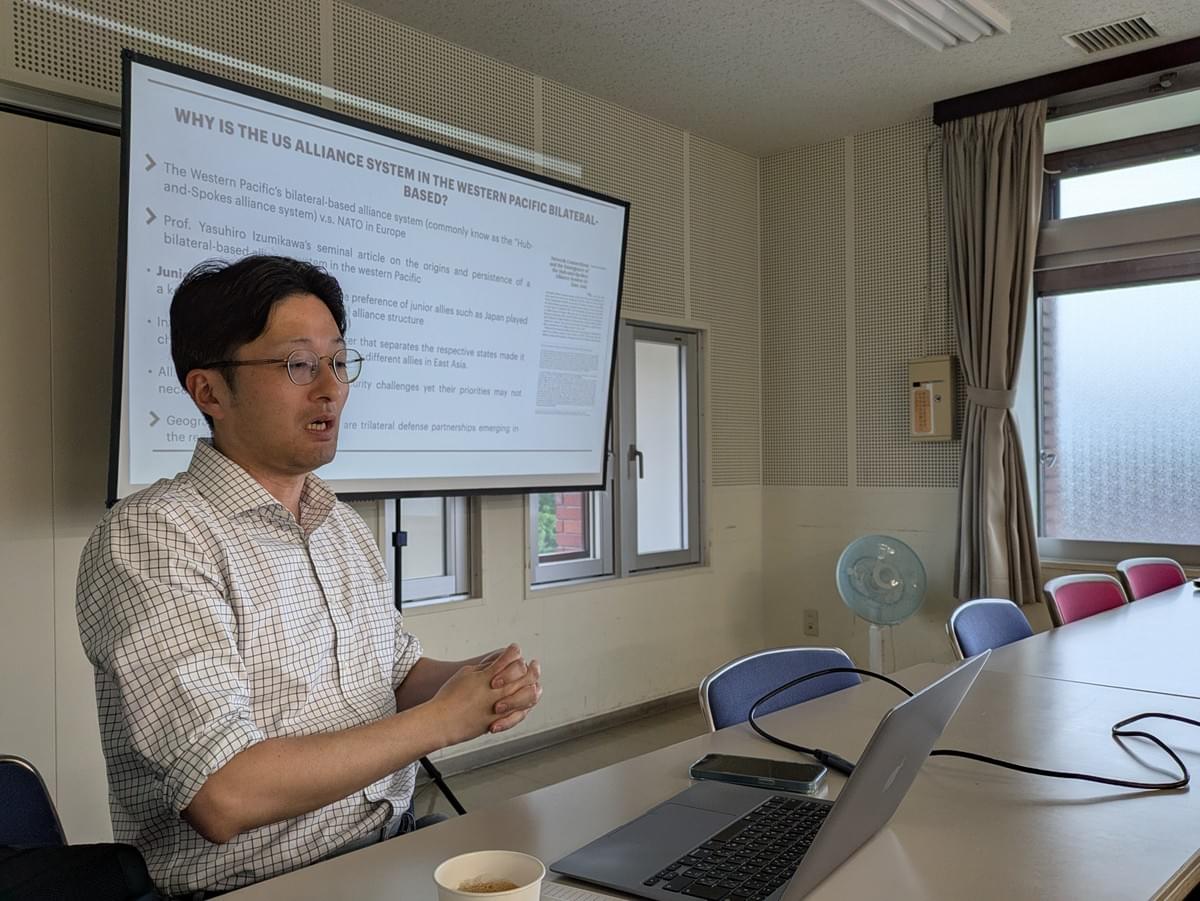
Dr. Matsuda argued that the Indo-Pacific region has historically been known for its bilateral alliance system, due to differences in security priorities amongst nations in the region and their geographical separation by sea. This differs from NATO in Europe, where countries are tied under a collective defense agreement. He then argued that trilateral partnerships such as the Australia-Japan-US agreement have become more common due to growing concerns about regional conflict involving North Korea, China, and Taiwan. It was also mentioned that these partnerships provide practical benefits, such as force dispersion, improved coordination, and intelligence sharing.
Dr. Matsuda discussed his idea that military alliances are critical for building combined defense capabilities, which deter hostile states from initiating conflicts and allow countries to project overwhelming geopolitical influence across a given area. One of the main arguments in the talk included factors needed to bring defense partnerships to fruition, encompassing ideas of asymmetric power relationships. These relationships depend on a few main points, including capability aggregation, collective deterrence power, and division of labor. A key takeaway was that in any alliance, stronger countries will often have more of a say when it comes to dictating the rules of the agreement since weaker alliance members may have less to offer. This creates an inherent asymmetric power relationship, which affects how partnerships are created. So countries face a major challenge: they must balance their desire for independence and self-reliance, but also strengthen their military security.
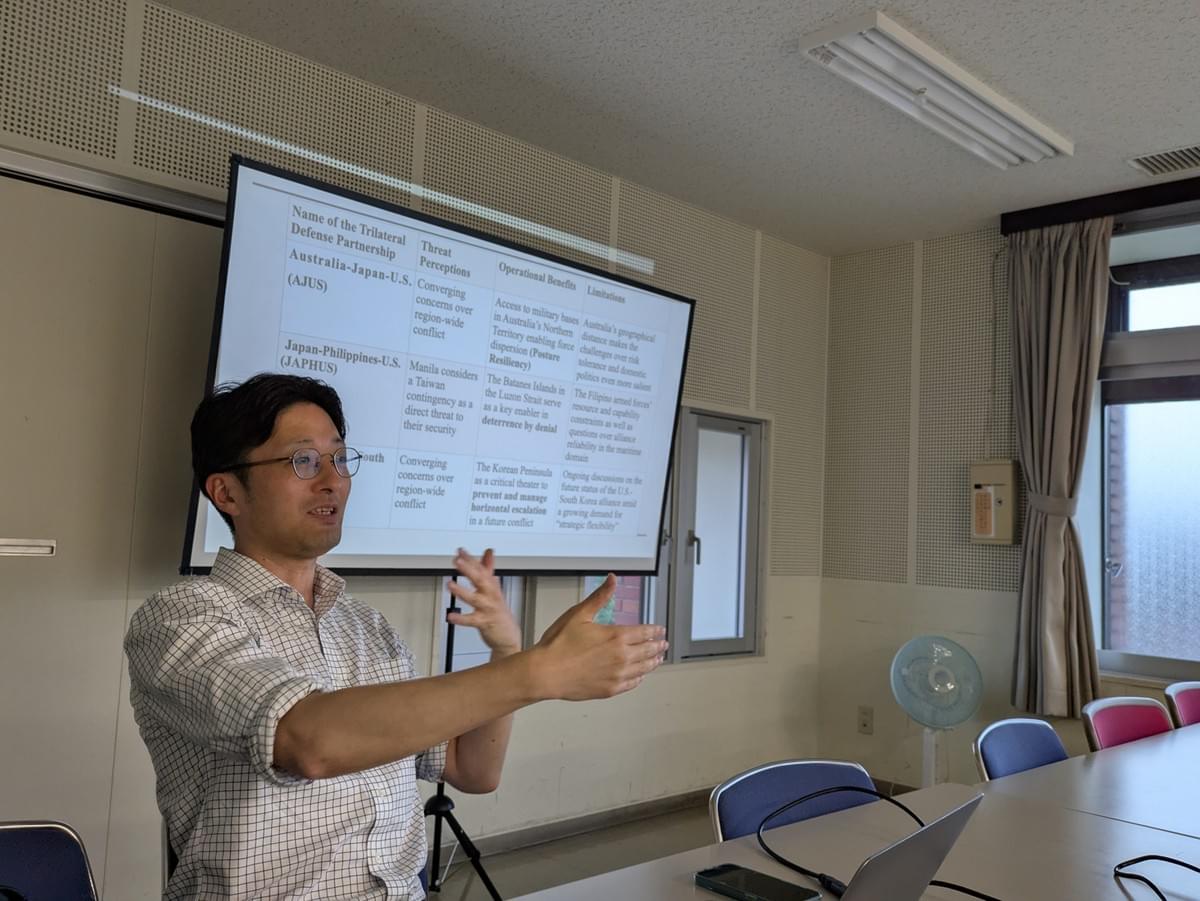
To see current examples of these relationships, Dr. Matsuda referenced three major trilateral defense partnerships in the Asia-Pacific region, including US-Japan-Philippines, US-Japan-South Korea, and US-Japan-Australia. While these are all examples of trilateral defense partnerships, the role of each is unique. Both the US-Japan-Philippines and the US-Japan-South Korea partnerships directly deter China and pose potential conflicts with Taiwan and North Korea due to their geographic location.
However, even given the increase in security concerns, Dr. Matsuda argues that a formal “Pacific Defense Pact” is not likely because of the unique constraints of junior allies and a difference in risk tolerance. An institutionalized yet incremental and flexible platform would be much more suitable for the western Pacific".