

On February 16, 2026, YCAPS hosted “Toward a More Multicultural, Yet Still Harmonious, Japan?” at What the Dickens in Ebisu. Moderated by Martin Fackler, former Tokyo bureau chief of The New York Times, the panel brought together Naoko Hashimoto, Associate Professor at International Christian University and Refugee Adjudication Counsellor at the Ministry of Justice; Henry Seals, Human Rights Commissioner in Nagareyama City; Toshihiko Yamamoto of Yamamoto Property Management; Timothy Langley, Founder of Langley Esquire; and Professor Hiroshi Korekawa of the National Institute of Population and Social Security Research.

The discussion examined the drivers behind rising public concern over immigration following the Liberal Democratic Party’s recent policy proposals. Hashimoto highlighted the sudden politicization of migration policy, identifying post-COVID inbound tourism, growth in long-term foreign residents, economic pressures, and social media misinformation as key factors. She outlined how political parties are diverging across nationalist, conservative, centrist, and integration-oriented approaches, while noting tensions within the ruling party between economic necessity and electoral strategy.

Korekawa contextualized Japan’s migration policy comparatively, arguing that Japan’s framework resembles those of other developed countries and has been relatively successful by certain indicators, including very low levels of undocumented migration. He emphasized that Japan’s migration history differs from Western colonial models and is shaped primarily by economic labor mobility and demographic aging. He cautioned that excessive tightening could negatively impact the Japanese economy.
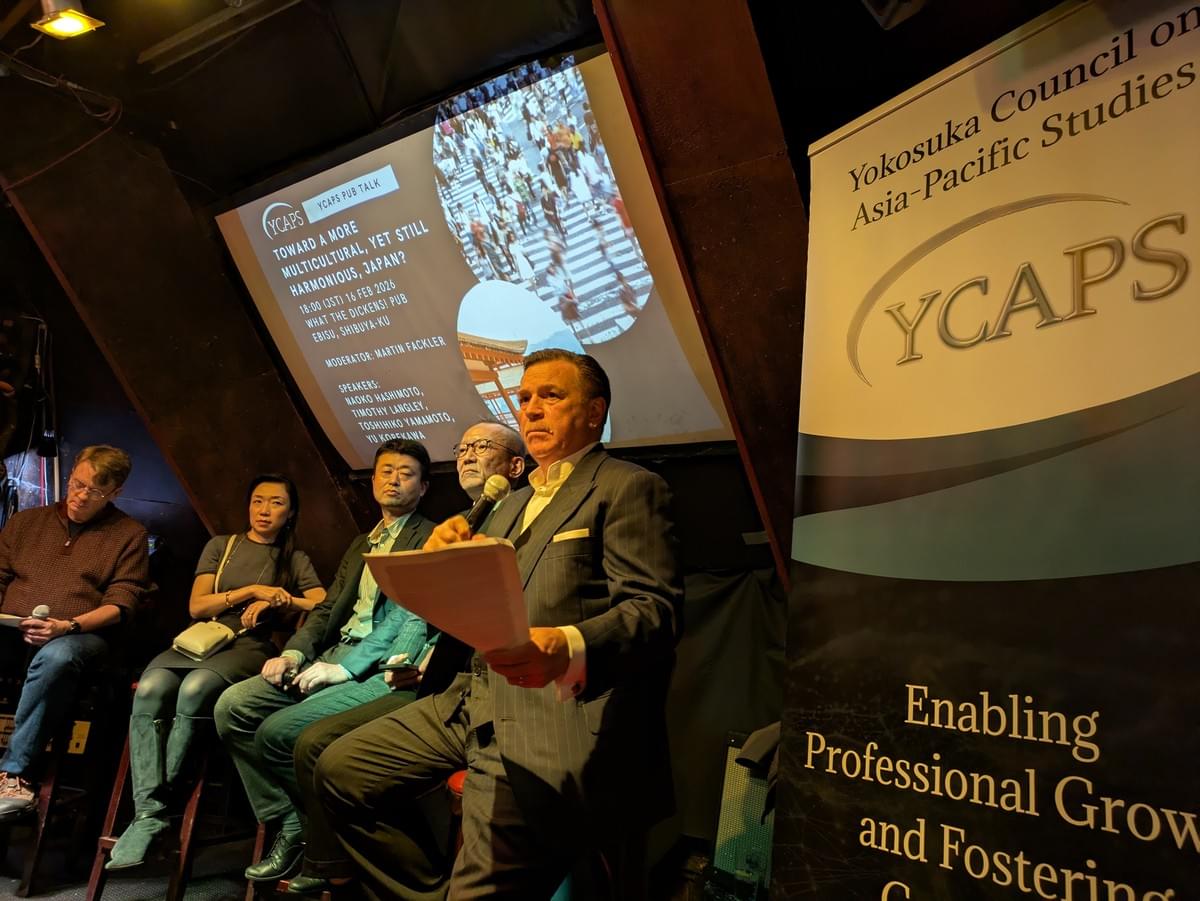
Langley stressed that the debate over foreigners reflects deeper questions about national identity, constitutional evolution, and Japan’s long-term positioning in Asia. He argued that public discourse often fails to distinguish between tourists and long-term residents and suggested that Japan must more clearly articulate what it expects of newcomers while recognizing its structural need for foreign labor.

Yamamoto offered a community and real estate perspective, underscoring the importance of language acquisition and adherence to local norms in maintaining social cohesion. He observed that while most foreign residents follow the rules, isolated incidents can disproportionately influence public sentiment and shape broader narratives.
Speakers also addressed labor programs such as the Specified Skilled Worker and Technical Intern Training frameworks, visa renewal procedures, and shifting public attitudes as foreign residents approach roughly three percent of the population, a level that can heighten political sensitivity.

The evening concluded with informal networking, extending a candid and multi-dimensional exchange on how Japan can balance demographic necessity, economic vitality, human rights, and social harmony in a period of rapid change.