

The Yokosuka Council on Asia-Pacific Studies (YCAPS), in collaboration with La Trobe Asia, the Philippines–Australia Forum, FACTS Asia, We Protect Our Seas, and the University of the Philippines–Diliman Asian Center, is pleased to announce the selected participants for the Subic SQUAD Forum 2026. This program is supported by funding from the United States-Japan Foundation and Australian National University-Philippines Institute.
Following a highly competitive selection process, we are proud to welcome a diverse cohort of scholars and practitioners from Australia, Japan, the Philippines, and the United States. These participants bring a wide range of expertise in Indo-Pacific security, defense cooperation, and regional governance, reflecting the program’s commitment to fostering the next generation of policy-relevant voices in the region.
Under the theme “Developing Emerging Voices on Regional Security: Positioning the Philippines as a Hub for Regional Security Cooperation,” the program will support participants through a combination of online training, mentorship, high-level policy engagement, and in-person collaboration in the Philippines.
Meet the 2026 Cohort:

Genevieve Quirk (Australia)
Genevieve Quirk BSc (UQ), DULF (UParis III–Sorbonne), MEnvLaw (ANU), PhD (UOW) is a Lecturer in International Relations at the University of Wollongong. Genevieve held a postdoctorate research fellowship on the Defence Strategic Policy Grant project ‘Pacific Maritime Security Coordination’ and her PhD at the Australian National Centre for Ocean Resources and Security examined the evolution and diplomacy of the making of an Ocean Continent by Pacific States. Dr Quirk joined the Australian delegation to the UN in relation to SDG14, the High Seas Biodiversity Treaty and Track 1.5 diplomatic missions with Vietnam and the Philippines. Dr Quirk’s published work examines the governance architecture implementing the United Nations Convention on the Law of the Seafocusing on the ecological security of the Indo-Pacific. Genevieve is on the editorial board of the journal Marine Policy, an East West Centre Visiting Fellow, Earth System Governance Research Fellow and a member of the IUCN World Commission on Environmental Law. In Brussels, Dr Quirk worked as a Policy Advisor on ocean governance reform in the EU. Previously, she held the position of Lecturer at the University of Paris II–Pantheon-Assas for three years whilst also consulting to UNESCO. Dr Quirk’s maritime security research is available: https://scholars.uow.edu.au/genevieve-quirk/publications

Grace Corcoran (Australia)
Grace Corcoran is a Research Fellow and the Senior Policy and Projects Manager in the Security and Geopolitics team at the Australia India Institute. She is particularly interested in Australian foreign and defence policy in Asia, Indian Ocean security, and minilateral cooperation. In her role, she researches security issues across the Indian Ocean, and leads on a project looking at defence and security cooperation between Australia, India and the Republic of Korea. Grace has over eight years’ experience in designing and delivering high-level dialogues, strategic initiatives, and policy research across South and Southeast Asia. Prior to joining the Institute, Grace managed DFAT-funded social protection programs across the Asia-Pacific at Development Pathways, providing technical policy advice and overseeing a multimillion-dollar regional portfolio. As Program Lead – Diplomacy at Asialink, she directed over 100 strategic initiatives, including the ASEAN-Australia Special Summit Emerging Leaders Dialogue, the ASEAN-Australia-New Zealand Dialogue, and bilateral forums on digital health, green economy, and strategic engagement across India, Vietnam, Indonesia, and Malaysia. Grace was a member of the New Colombo Plan (NCP) External Advisory Group in 2024, advising the Assistant Foreign Minister on youth mobility and regional education strategy. She was the first NCP Scholar to the Federated States of Micronesia and has undertaken fieldwork and policy roles in Sri Lanka, the Philippines, the Maldives, and Canada. In 2025, Grace was a finalist in Asia Society’s Melbourne Asia Game Changer Awards and was named one of Australia’s Young Women to Watch in International Affairs in 2023. Grace has held leadership positions with Amnesty International Australia and the Victorian Pride Lobby.Grace holds a Master of Development Studies from the University of Melbourne and a double Bachelor’s degree in Public Health and Global Studies from the Australian Catholic University.

Kester Abbott (Australia)
Kester Abbott is a Research Associate at the United States Studies Centre at the University of Sydney, where he works on US Indo-Pacific strategy, defence industry issues and Northeast Asia strategic dynamics. He also served as a Non-resident James A. Kelly Korea Fellow at the Pacific Forum and a member of the Korea-EU-NATO NextGen Policy Experts Network. Kester holds a Masters degree in Global Affairs and Policy from Yonsei University in Seoul, South Korea and a First-Class Bachelor (Hons) degree in History from University College London. He has worked at a number of think tank and research centres, including Chatham House, the East Asia Institute, the Peninsula Diplomacy Group, the Yonsei Center for International Studies and the Yonsei Center on Oceania Studies.

Tara Luckock (Australia)
Tara Luckock is a Research Associate with the Foreign Policy and Defence Program at the United States Studies Centre, where her research focuses on the regional implications of US foreign policy and defence strategy in the Indo-Pacific. She also co-leads the Women in the Alliance program, a networking initiative connecting 20 early career professionals with women in senior leadership across Australia and the US. Prior to joining the Centre, Tara worked at Streem, where she facilitated the delivery of comprehensive monitoring, insights and reporting of the Australian and New Zealand media landscape to government and corporate clients. She has also interned at the French-Australian Chamber of Commerce as a Marketing and Communications Assistant. Tara holds a Bachelor of Arts and Bachelor of Advanced Studies (Honours Class I) from the University of Sydney, with majors in Politics and International Relations, and French and Francophone Studies. She also completed an academic exchange program at Université Jean Moulin in Lyon, France.

Brendon J. Cannon (United States)
Dr. Brendon J. Cannon is an Associate Professor of International Security at Khalifa University in Abu Dhabi, UAE, and a specialist in geopolitics, international security, and emerging technologies, with particular expertise in the governance and security of critical infrastructure, including undersea communication cables. Over the past five years, he has developed a sustained research program on undersea cables in the context of global governance, economic security, and great power competition, publishing on these issues in both peer-reviewed journals and policy outlets, including Marine Policy. His work examines when and where cable systems are most vulnerable, how geopolitical tensions shape infrastructure design, and how policy responses—such as route diversification or “trusted” networks—may produce unintended consequences for resilience. Dr. Cannon’s broader scholarship spans leading journals such as International Affairs, Geopolitics, Global Policy, The Pacific Review, Third World Quarterly, and Asian Security, and he is the co-editor of Indo-Pacific Strategies (Routledge, 2022) and Conflict and Cooperation in the Indo-Pacific (Routledge, 2020). He has over 30 years of global experience advising governments, international organizations, and private-sector actors on geopolitical risk and strategic infrastructure in a fragmented international order, including engagements with the U.S. Department of State, the United Nations, and governments across the Middle East, East Asia, and Africa. His affiliations with the Balsillie School of International Affairs, the Institute of Security and Development Policy (Stockholm), and Indo-Pacific research networks, combined with his policy-facing research and Track 1.5 engagement, position him well to develop a case study that bridges academic analysis and real-world governance dilemmas. This proposed case draws directly on his expertise in undersea cable security, interdependence, and infrastructure governance in an era of intensifying geopolitical rivalry.

Mary Kate Soliva (United States)
Dr. Mary Kate Soliva is a U.S. Army SOF Veteran, Rotarian, and co-founder of the Guam Human Rights Initiative (GHRI), where she advances human rights across Guam and the Pacific through research, advocacy, and regional engagement. Her work reflects the growing importance of the Indo-Pacific as a space for security cooperation, as demonstrated by GHRI’s engagement at the United Nations Forum in Geneva and regional initiatives in Guam and the Philippines, in collaboration with government stakeholders. Soliva is a Hoover Institution Veteran Fellow in the inaugural fellowship program under the direction of former U.S. Secretary of State Dr. Condoleezza Rice. She is an Assistant Professor of Public Administration and Legal Studies at the University of Guam, where she teaches policy courses at the undergraduate and graduate levels. A TEDx Hagåtña speaker, Soliva has trained both public and military audiences to recognize and address human trafficking, and she continues to guide local, national, and global leaders in developing effective strategies to strengthen homeland security. Her doctoral research examined how military experience shapes law enforcement approaches to human trafficking. Through her work, Soliva elevates Guam and the broader Pacific as critical voices in advancing collaborative, cross-national responses to security challenges across the Indo-Pacific.
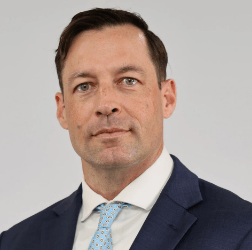
Ron J. Lienhardt (United States)
Ron J. Lienhardt is a Marine Corps infantry officer and Southeast Asia foreign area officer who recently served as the first operations officer of the U.S. Military Group at the U.S. Embassy in Kuala Lumpur. Before that assignment, he commanded a rifle company and served as the fires and effects coordinator as 1st Battalion, 3rd Marines became the 3rd Littoral Combat Team. He has a Master's Degree in Security Studies of East and Southeast Asia from the Naval Postgraduate School, and has had works published by War on the Rocks, the Marine Corps Gazette, and Joint Special Operations University.

Samara Duerr (United States)
Samara Duerr currently serves as a policy analyst for the National Security and Dual-use Technology (NSDT) taskforce at Taiwan’s government-funded Research Institute for Democracy, Society, and Emerging Technology (DSET). Samara earned her Master’s degree in Asia Pacific Studies at National Chengchi University in Taiwan, where her thesis focused on Taiwan’s former nuclear weapons program. She has also received a Bachelor’s degree in International Relations and Chinese Studies at Emory University in the US, and has studied at Yonsei University in Seoul and the School of Oriental and African Studies (SOAS) in London. Her research focuses on dual use technology—specifically unmanned vehicles—in relation to Taiwan-Ukraine and Taiwan-US cooperation. With an emphasis on techno-geopolitics, her work specializes in the drone supply chain, emerging technology, and US-Taiwan relations.

Sean Kesluk (United States)
Sean's career has spanned private capital, military service, and law across Asia and the United States. He is currently completing his J.D. at New York University School of Law (Class of 2026)* and is a Venture Fellow at AIN Ventures, an early-stage deep tech fund. During law school, he spent time with the frontier markets investment team at Cerberus Capital Management in Singapore and as a summer associate at Cooley LLP in New York. Prior to law school, Sean served as a U.S. Navy intelligence officer in the Indo-Pacific, supporting strike group operations aboard the forward-deployed aircraft carrier in Japan and driving the CARAT series of bilateral and multilateral exercises with partner navies in Southeast Asia. He currently supports maritime intelligence training with the Global Maritime Crime Programme of the United Nations Office on Drugs and Crime. Before the Navy, Sean was a private equity analyst at a boutique firm in Hong Kong, focusing on real estate and renewable energy. He holds an undergraduate degree in political science from Harvard University.

Haruka Chunhyang Zatake (Japan)
Haruka Chunhyang Satake is a journalist in the International News Department at Nikkei, where she covers East Asian security and diplomacy. She holds a Master of Arts in Asian Studies from the Elliott School of International Affairs at the George Washington University, where she focused on regional security and foreign policy. During her time in Washington, D.C., she conducted research on U.S.-Japan-ROK trilateral security cooperation at leading policy institutions, including the Edwin O. Reischauer Center for East Asian Studies at Johns Hopkins University. She also contributed to research on North Korean top women through the Stimson Center’s 38 North fellowship program. As a Korean Japanese, Haruka brings a unique perspective shaped by her engagement with issues of identity, historical memory, and women’s rights. She is particularly interested in dialogue-based approaches to conflict resolution and in strengthening regional cooperation in East Asia.

Masakazu Sakunaka (Japan)
Masakazu Sakunaka is Navy Captain in Japan Maritime Self-Defense Force (JMSDF) with extensive experience in defense logistics, international collaboration, and strategic planning. He currently leads a research division at a JMSDF training institution, where he oversees projects on AI-driven specification development and operational efficiency. He holds an MBA from U.S. Naval Postgraduate School and completed the Security and Strategy program at Royal College of Defence Studies, where he conducted research on China’s strategic expansion and influence in Pacific Island nations over Philippines, with a Postgraduate Certificate from King’s College London. His professional background bridges practical operations and strategic analysis, particularly in Indo-Pacific security. Sakunaka’s recent work focuses on defense cooperation, capacity building, and equipment transfer, with particular attention to Japan’s engagement with the Philippines and its role in strengthening regional security frameworks. Drawing on both operational experience and policy research, he is interested in how minilateral arrangements such as those among Japan, the United States, Australia, and the Philippines can enhance deterrence and resilience. Through the Subic Squad Forum, he aims to contribute policy-oriented insights and develop practical approaches to sustainable and effective security cooperation in the Indo-Pacific.

Tomoaki Koma (Japan)
Tomoaki Koma graduated from Ritsumeikan Asia Pacific University in 2009, majoring in International Relations. In 2014, he joined the Japan Maritime Self-Defense Force Officer Candidate School. During the post-graduation overseas training cruise, he visited approximately 11 countries across North, Central, and South America. Tomoaki initially trained as a pilot but later transitioned to an equipment officer. Since then, he has served in Yokosuka, Sasebo, and Kure, where he was responsible for the maintenance, repair, and modification of naval vessels and submarines. In this role, he acted as a liaison between the JMSDF and shipyards and specialized contractors, coordinating complex projects. Currently, Tomoaki is assigned to the Maritime Materiel Command in Tokyo, where he is engaged in the export of FFM (new-type frigates) to Australia, maintenance contracts for OPVs, and bilateral coordination under DICAS (Defense Industrial Cooperation, Acquisition and Sustainment) with the U.S. Navy.

Umi Ariga (Japan)
Umi Ariga is a Research Fellow at the Japan Institute of International Affairs, where she leads research on emerging technologies and Indo-Pacific security. Her current work focuses on nuclear policy and the governance of military AI. Previously, she was a Japan Chair Fellow at the Vienna Center for Disarmament and Non-Proliferation and has worked with JP Morgan, the United Nations Office for Disarmament Affairs, and NATO. Umi holds master’s degrees from the University of Tokyo and Seoul National University and is fluent in English, French, and Japanese.

Deryk Matthew N. Baladjay (Philippines)
Deryk Matthew N. Baladjay is a Lecturer at the Department of International Studies at De La Salle University and a member of the Young Leaders Program of Pacific Forum. He also serves as a consultant for the Manila-based Amador Research Services. His work focuses on East and Southeast Asian security, with particular attention to geopolitics, strategic studies, Philippine foreign policy, and the Philippines–United States alliance. His work has been published by Defence Studies, Defense & Security Analysis, FACTS Asia, the Philippine Institute for Development Studies, and the Peace Research Institute Oslo, among others.

Fernando Dysico (Philippines)
Fernando Dysico is a recent graduate of Susquehanna University, where he earned a Bachelor of Arts in Mathematical Economics and International Studies in May 2026. His experience includes interning at the Philippine Department of Finance and serving as a Fellow in the Pennsylvania House of Representatives. In summer 2026, he will intern with the Hoover Institution, contributing to fiscal policy research. His greatest career achievement thus far has been producing a policy report and proposal that called on the Commonwealth of Pennsylvania to investigate how waste heat recovery technology could repurpose heat generated by data centers to meet other heating demands. The proposal has received the sponsorship of a Pennsylvania State Representative. Fernando’s research interests lie in fiscal policy, political economy, and international affairs. In the future, he hopes to continue working in public policy and contribute to data-driven solutions that promote long-term development.

John Louis B. Benito (Philippines)
John Louis B. Benito, LPT, MA- Accomplished the Master of Arts in International Studies, Major in European Studies Program at De La Salle University in 2024. He is currently a faculty lecturer and the Service-Learning Coordinator for the Department of International Studies under the same university. On the side, he writes International Relations commentaries for various media publications such as The World Financial Review, Centre for Strategic and International Studies, Global Policy Journal, and The Monitor of the Carter Center’s China Focus Initiative. Moreover, he has also published research articles and served as a peer reviewer for several Scopus-indexed journals. He is currently focused on writing articles, policy contributions, and overall knowledge creation about Security Studies, Outer Space, and Astropolitics.

Matteo Piasentini (Philippines)
Matteo Piasentini is a PhD candidate in Political Science at the University of the Philippines Diliman, Department of Political Science, where he also serves as a Senior Lecturer. He is the China and Indo-Pacific Program Coordinator at the Center for Geopolitical Studies (Geopolitica.info), a non-resident Vasey Fellow at Pacific Forum, and an external analyst for FACTS Asia. His primary research focuses on Indo-Pacific minilateralism from the perspective of smaller Southeast Asian states and the agency of less powerful states in shaping regional security. Additionally, his expertise includes Philippine foreign policy, South China Sea security, and European engagement with Southeast Asia. He has also contributed to scholarly debates on technology and minilateralism. He is the co-author of two academic papers on minilateralism and participates in a multinational scholarly working group on the subject. Furthermore, he has authored book chapters and papers on Philippine foreign policy and Italy's economic engagement with the Indo-Pacific. Finally, he is active in writing policy editorials for outlets such as ISEAS Commentaries, EUI Cadmus, Geopolitica.info, FACTS Asia, Eastwest, and the Australian Institute for International Affairs. He also participated as a speaker and contributor for a report on the Philippines' middle-power engagements for Torino World Affairs Institute.

Najwa Unga (Philippines)
Najwa I. Uñga is a Defense Research Officer at the Philippines’ Department of National Defense. Her responsibilities include supporting bilateral, minilateral, and multilateral engagements, including with the SQUAD. She earned her Bachelor of Arts in Political Science, summa cum laude, from the University of the Philippines Diliman in 2022. She participated in the IISS Shangri-La Dialogue Southeast Asian Young Leaders’ Program in 2024, and is a member of the Pacific Forum’s Young Leaders Program.

Santiago Juditho Emmanuel L. Castillo (Philippines)
Santiago Juditho Emmanuel L. Castillo has a MSc degree in Strategic Studies from the S.Rajaratnam School of International Studies - Nanyang Technological University, an MA degree in International Studies major in Asian Studies from De La Salle University - Manila, and a BA degree in Philosophy from San Beda University. His research specializations and interests touch on defense/security policies, strategic studies, military capabilities and defense technology developments, Japan-Philippine defense and security relations, geopolitical intelligence, and recently emerging technologies relevant to defense innovation. He currently works for KVG, a US-based logistics company initially as Support Manager and now as a Strategic Capture Specialist, where he engages with government and private sector partners and stakeholders on industry and services related or in support of defense logistics and defense technology innovation. He was previously a Planning Assistant and Executive Assistant for the Philippines’ National Security Council for over three years, and part-time assistant lecturer at De La Salle University and the Lyceum of the Philippines University. He has published peer-reviewed articles and commentaries on Philippine defense capabilities, Philippine defense partnerships, and regional geopolitical issues in the Indo-Pacific.
The Yokosuka Council on Asia-Pacific Studies (YCAPS) is proud to work in collaboration with La Trobe Asia, the Philippines–Australia Forum, FACTS Asia, We Protect Our Seas, and the University of the Philippines–Diliman Asian Center to foster the next generation of policy-relevant voices in the region. Media inquiries can be directed to Ivy Ganadillo (ivy.ganadillo@ycaps.org).